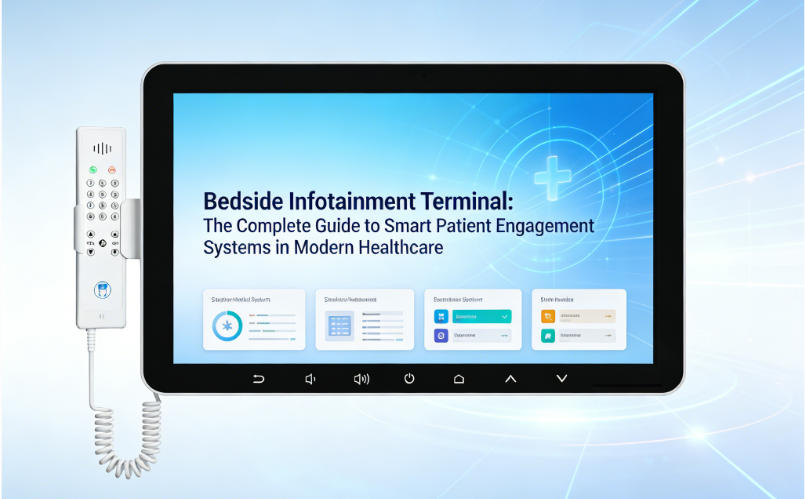
Bedside Infotainment Terminal: The Complete Guide to Smart Patient Engagement Systems in Modern Healthcare
- Introduction to Bedside Infotainment Terminals
- What Is a Bedside Infotainment Terminal?
- Key Features of Advanced Bedside Infotainment Systems
- Technical Specifications of Modern Bedside Terminals
- Benefits of Bedside Infotainment Terminals for Hospitals
- Use Cases Across Healthcare Environments
- Integration with Hospital Ecosystems
- Security and Compliance Standards
- Choosing the Right Bedside Infotainment Terminal
- Future Trends in Bedside Infotainment Technology
- Bedside Infotainment vs Traditional Patient Systems
- Conclusion: Transforming Patient Care Through Digital Innovation
- FAQ: Bedside Infotainment Terminal
Introduction to Bedside Infotainment Terminals
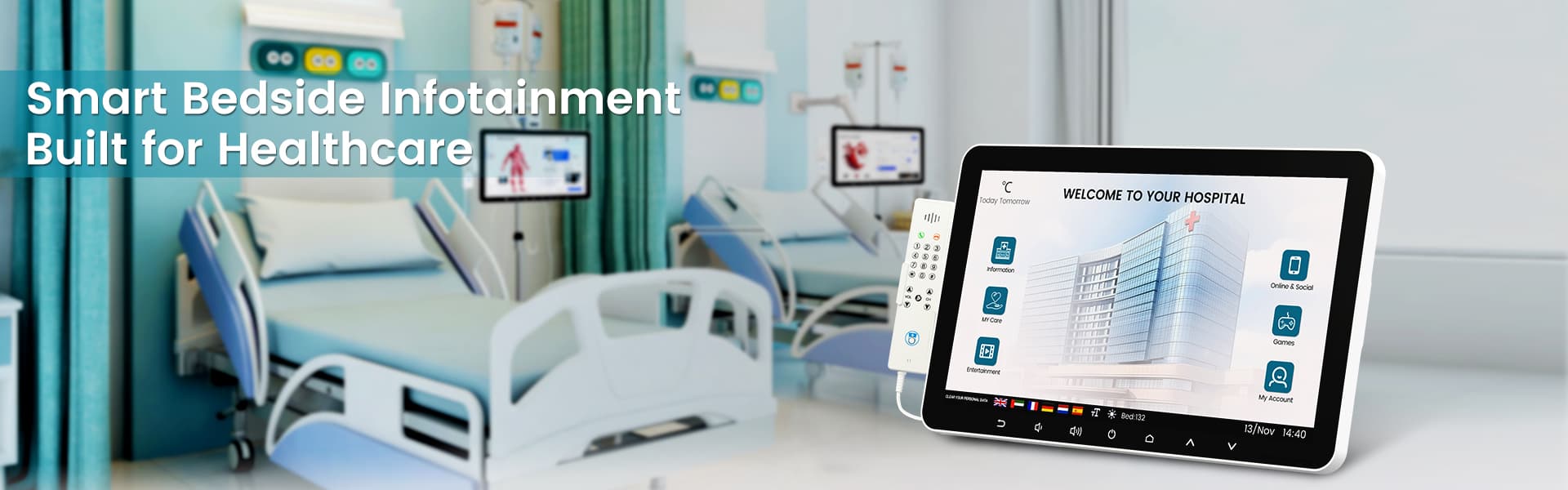
We define a bedside infotainment terminal as an integrated smart device installed at the patient’s bedside that combines entertainment, communication, clinical access, and hospital service control into a single interactive platform. These systems are rapidly transforming patient experience, operational efficiency, and digital healthcare delivery.
Hospitals are no longer limited to passive patient care environments. With advanced bedside terminals, we enable real-time interaction, personalized content delivery, and seamless integration with hospital information systems (HIS), electronic medical records (EMR), and nurse call systems.
What Is a Bedside Infotainment Terminal?
A bedside infotainment terminal is a multifunctional touchscreen device designed specifically for healthcare environments. It serves as a centralized hub for:
- Patient entertainment (TV, movies, music, internet)
- Clinical data display (treatment plans, medication schedules)
- Communication tools (video calls, nurse call integration)
- Hospital services (meal ordering, billing, feedback)
Unlike standard tablets, these terminals are medical-grade, designed for durability, hygiene compliance, and continuous operation.
Key Features of Advanced Bedside Infotainment Systems
1. Interactive Patient Engagement Interface
We deliver intuitive touchscreen interfaces that allow patients to:
- Access personalized health information
- Receive educational content related to their condition
- Track recovery progress in real-time
2. Seamless HIS & EMR Integration
Direct integration with hospital systems ensures:
- Accurate display of patient data
- Automated updates on treatment schedules
- Reduced manual workload for medical staff
3. Multimedia Entertainment Capabilities
Patients gain access to:
- Live TV streaming
- On-demand video content
- Music and radio services
- Internet browsing and apps
4. Nurse Call and Communication Integration
The system connects directly to nurse call infrastructure, enabling:
- Instant assistance requests
- Priority alerts for critical patients
- Two-way communication between patients and staff
5. Smart Room Control
We empower patients to control their environment:
- Lighting
- Air conditioning
- Curtains and blinds
6. Telemedicine and Video Consultation
Built-in cameras and microphones allow:
- Remote consultations
- Specialist access without physical transfer
- Reduced infection risks
Technical Specifications of Modern Bedside Terminals
| Component | Specification Highlights |
|---|---|
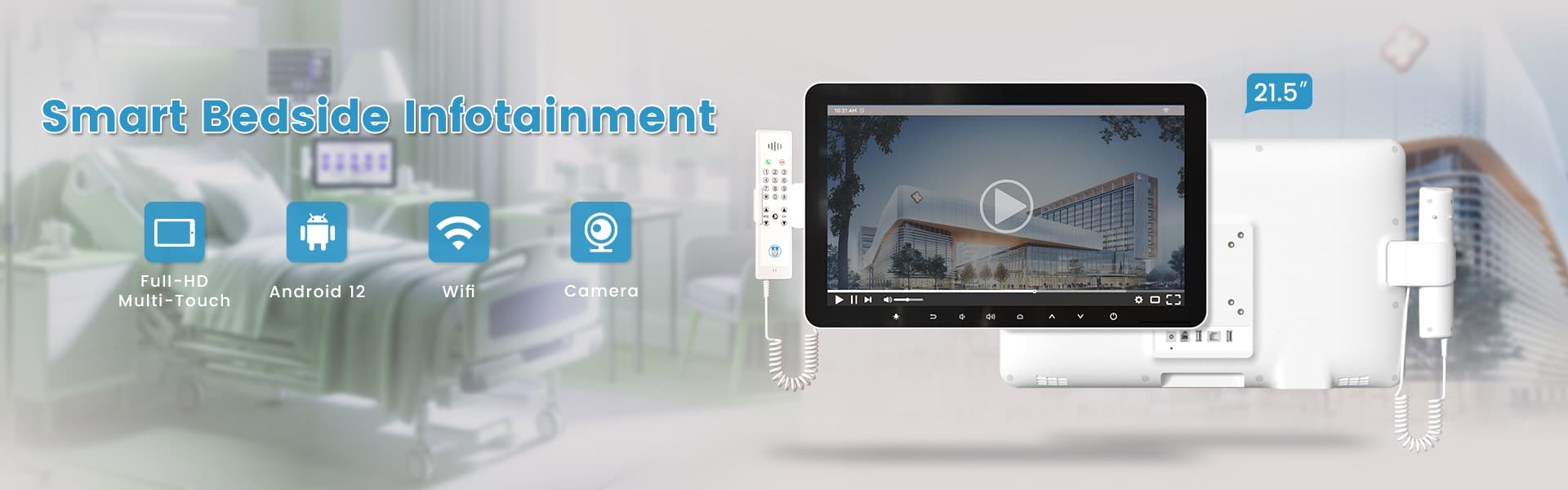
| Display | 10–21 inch Full HD / Anti-glare touchscreen |
| Operating System | Android / Linux / Windows |
| Connectivity | Wi-Fi, Bluetooth, Ethernet, 4G/5G (optional) |
| Processor | Quad-core / Octa-core ARM |
| Hygiene Design | Antibacterial housing, easy-to-clean surfaces |
| Mounting | Bed arm, wall mount, or mobile cart |
| Power Supply | Medical-grade power with backup support |
Benefits of Bedside Infotainment Terminals for Hospitals
Enhanced Patient Satisfaction
We improve patient experience by offering personalized entertainment and communication tools, significantly increasing satisfaction scores.
Increased Operational Efficiency
Automation of routine tasks such as meal ordering and information dissemination reduces staff workload and minimizes human error.
Improved Clinical Outcomes
Patients who are informed and engaged tend to:
- Adhere better to treatment plans
- Experience reduced anxiety
- Recover faster
Revenue Generation Opportunities
Hospitals can introduce:
- Premium entertainment packages
- Advertising services
- Paid telecommunication features
Use Cases Across Healthcare Environments
Hospitals and Inpatient Wards
- Patient monitoring dashboards
- Treatment visibility
- Integrated nurse call systems
Private Clinics
- Patient education tools
- Appointment management
- Digital check-in/out
Long-Term Care Facilities
- Social interaction via video calls
- Cognitive engagement programs
- Remote monitoring
Smart ICUs
- Real-time vitals display
- Controlled communication access
- Tele-ICU integration
Integration with Hospital Ecosystems
We ensure full interoperability with:
- HIS (Hospital Information Systems)
- EMR/EHR platforms
- PACS imaging systems
- Nurse call systems
- IoT-based smart room controls
This creates a unified digital environment where patient data, communication, and services operate seamlessly.
Security and Compliance Standards
We prioritize healthcare-grade security by implementing:
- End-to-end data encryption
- Role-based access control
- Secure authentication protocols
- Compliance with HIPAA and GDPR frameworks
Patient data privacy remains protected at every interaction point.
Choosing the Right Bedside Infotainment Terminal
Hardware Considerations
- Medical-grade certification
- Anti-bacterial materials
- Durable and rugged design
Software Capabilities
- Customizable UI/UX
- Open API for integration
- Multi-language support
Scalability
We design systems that scale from small clinics to multi-hospital networks without performance degradation.
Future Trends in Bedside Infotainment Technology
AI-Powered Personalization
We are seeing increased adoption of AI-driven systems that:
- Recommend content based on patient profiles
- Predict patient needs
- Enhance clinical decision support
IoT and Smart Hospital Integration
Bedside terminals are becoming central control units for:
- Smart beds
- Wearable devices
- Environmental sensors
Cloud-Based Infrastructure
Cloud integration enables:
- Remote updates
- Centralized management
- Scalable deployment
Bedside Infotainment vs Traditional Patient Systems
| Feature | Traditional Systems | Bedside Infotainment Terminal |
|---|---|---|
| Entertainment | Limited TV | Full multimedia suite |
| Patient Interaction | Passive | Interactive touchscreen |
| Data Integration | None | Full HIS/EMR integration |
| Communication | Basic call button | Video & messaging |
| Personalization | None | High |
Conclusion: Transforming Patient Care Through Digital Innovation
We position bedside infotainment terminals as a cornerstone of modern healthcare infrastructure. By combining patient engagement, clinical integration, and operational efficiency into a single platform, these systems redefine how care is delivered at the bedside.
Hospitals adopting these solutions gain a competitive advantage through improved patient satisfaction, optimized workflows, and future-ready digital transformation.
FAQ: Bedside Infotainment Terminal
What is a bedside infotainment terminal used for?
It is used to provide patients with entertainment, access to medical information, communication tools, and hospital services directly from their bedside.
Are bedside infotainment systems secure?
Yes, they implement advanced encryption, authentication, and compliance standards to protect patient data.
Can these terminals integrate with hospital systems?
They fully integrate with HIS, EMR, nurse call systems, and other healthcare IT infrastructure.
Do they improve patient outcomes?
Engaged patients are more informed, less anxious, and more likely to follow treatment plans, contributing to better outcomes.
What industries benefit from bedside infotainment terminals?
Hospitals, clinics, long-term care facilities, rehabilitation centers, and smart healthcare environments all benefit significantly.
相关推荐内容
Latest Content
- 10 Inches Sunlight Readable Tablet: 2026 Procurement & Technical Framework
- How to Troubleshoot Connectivity Issues on a Mobile Data Terminal (2026 Protocol)
- Rugged Android Tablet for Fleet Management: 2026 Complete Guide (Latest Data & Cases)
- Boosting Efficiency and Reliability: How Rugged Tablets Revolutionize Modern Transportation Operations
- Optimizing Fleet Efficiency: The Essential Guide to Mobile Data Terminal Hardware
Hot product
- WMT6UQ: 6-Inch 4G Android 12 Wireless Carplay Navigator Motorcycle PND
- WT10RX: 10.1 inch rugged tablet,10.1″ sunlight-readable display,10.1" ip67 rugged tablet
- WT10MX: 10.1 inch rugged tablet 12,000 mAh,10.1″ IPS display Rugged IP65 design
- WT08Q9Y: 8 inch 10000mAh long battery rugged tablet,1000-nit rugged tablet,
- WT08M8Y: 8 inch Android 14,700-nits rugged tablet