10 Inches Sunlight Readable Tablet: 2026 Procurement & Technical Framework
Summary: This guide provides Procurement Specialists and Operations Directors with a technical validation framework for sourcing 10-inch sunlight readable tablets. It focuses on 2026 display standards, optical bonding techniques, thermal management, and total cost of ownership models to ensure hardware reliability in high-lux environments.
What Brightness & Optical Standards Define Sunlight Readability?
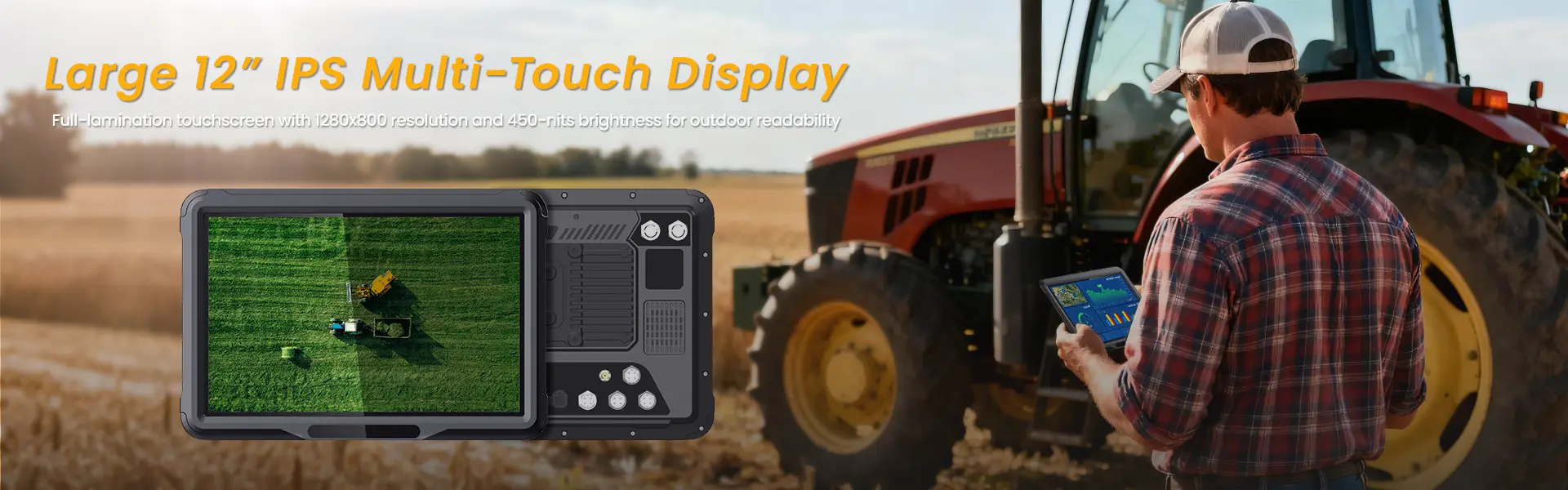
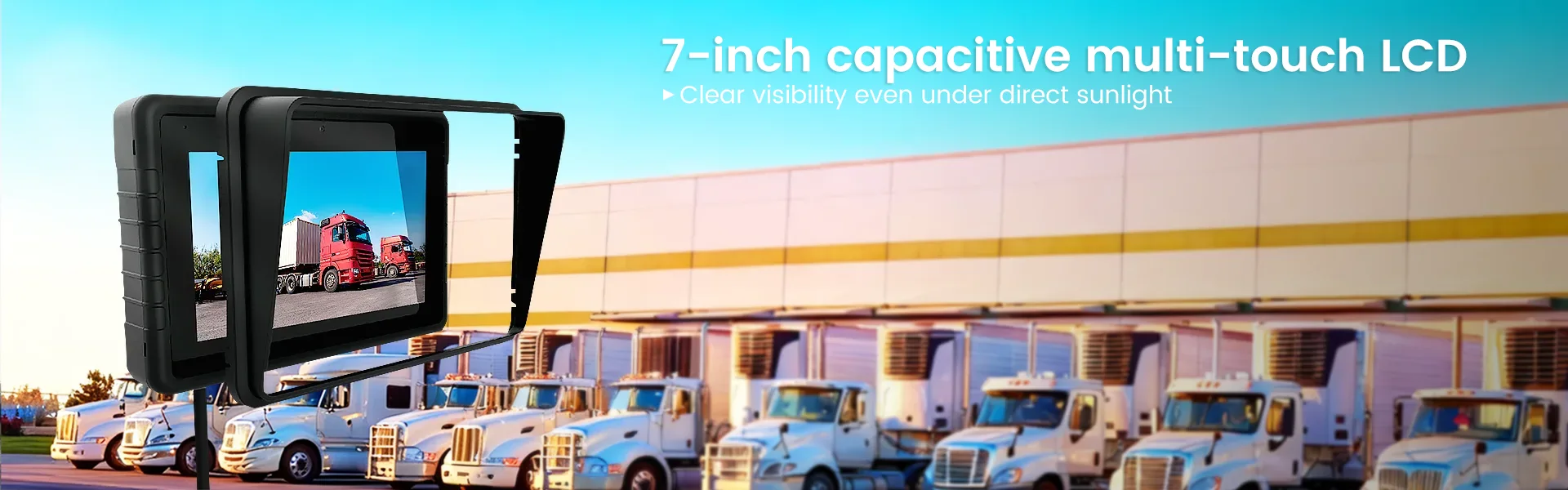
A true sunlight readable 10-inch tablet in 2026 requires a minimum brightness of 1000 nits combined with optical bonding to reduce internal reflection and maintain contrast ratios above 500:1 in direct sunlight.
Display Performance Metrics
- Peak Brightness: Standard indoor tablets offer 400-500 nits; outdoor units must sustain 1000-1500 nits without thermal throttling.
- Optical Bonding: Air gap elimination between glass and display reduces reflection by 90% and prevents fogging in humidity.
- Anti-Glare Coating: Matte finishes with Haze 25% balance readability against image clarity loss.
- Transflective Technology: Some 2026 models utilize hybrid LCD/reflective layers to boost visibility while lowering power consumption by 30%.
[Table: Display Specification Comparison]
| Specification | Standard Consumer Tablet | Sunlight Readable Tablet (2026) |
|---|---|---|
| Brightness | 400-500 nits | 1000-1500 nits |
| Contrast Ratio (Sun) | < 100:1 | > 500:1 |
| Surface Treatment | Glossy | Anti-Glare Matte + Oleophobic |
| Bonding Type | Air Gap | Full Optical Bonding |
| Touch Sensitivity | Capacitive (Finger) | Glove + Rain + Stylus Support |
How Does Environmental Resilience Impact Display Longevity?
Environmental resilience impacts longevity by preventing LCD crystal damage from temperature extremes and delamination from UV exposure, requiring MIL-STD-810H certification for valid outdoor deployment.
Critical Durability Factors
- Operating Temperature: Panels must function between -20°C to 60°C without backlight failure or slow response times.
- UV Resistance: Glass must be treated to prevent yellowing or degradation after 5,000 hours of direct sun exposure.
- Thermal Management: High-brightness backlights generate heat; passive heat sinks or active cooling fans are required to prevent screen burn-in.
- Vibration Resistance: 10-inch screens are prone to flex; chassis reinforcement is needed to prevent LCD cracking during vehicle movement.
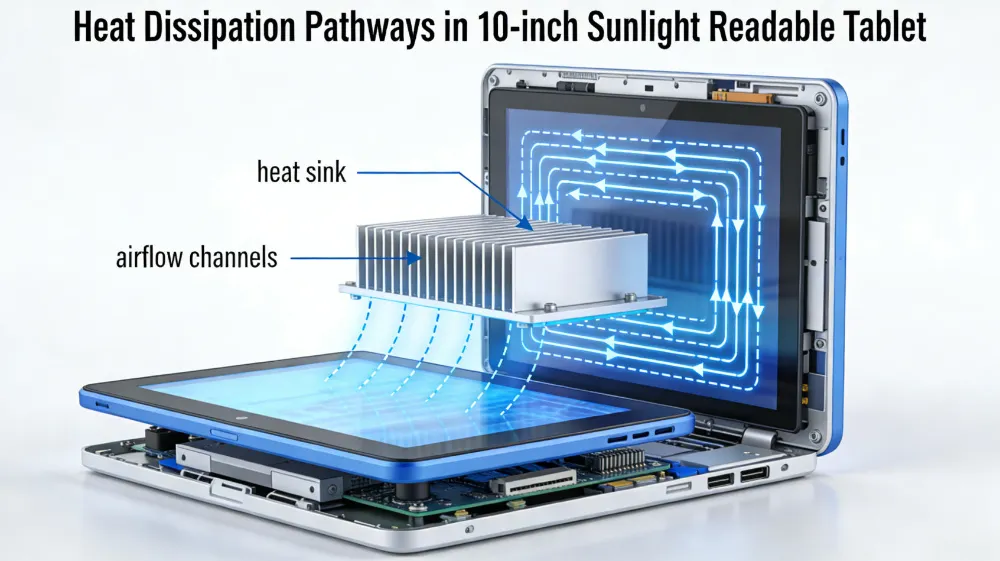
Diagram showing heat dissipation pathways in a 10-inch sunlight readable tablet, highlighting heat sinks behind the LCD panel and airflow channels.
Protection Ratings
- IP65/IP66: Mandatory for dust and water jet protection in outdoor logistics.
- Gorilla Glass Victus 2: Minimum standard for drop resistance on the display surface.
- Sealed Ports: All charging and data ports must have rubberized covers to maintain IP ratings.
Which Procurement Validation Steps Ensure Hardware Compliance?
Direct Answer: Ensure compliance by requesting third-party lab reports for brightness and durability, conducting field pilot tests for 14 days, and verifying panel uniformity across batch orders.
Validation Checklist
- Lux Meter Test: Verify brightness claims using a calibrated lux meter in direct sunlight (100,000 lux conditions).
- Viewing Angle Check: Confirm readability at 85-degree angles for mounted vehicle installations.
- Touch Response: Test capacitive touch with wet gloves and rain simulation.
- Battery Drain Analysis: Measure battery consumption at max brightness; expect 2x drain compared to indoor usage.
- Mounting Compatibility: Verify VESA or vehicle-specific dock compatibility for the 10-inch form factor.
Procurement Risk: Batch variance in LED backlights can cause color shifting between devices.
Mitigation: Require Delta E < 3 color consistency guarantees in the supply contract to ensure fleet-wide display uniformity.
What Is the Total Cost of Ownership (TCO) for Outdoor Tablets?
The TCO for sunlight readable tablets is 40% higher upfront but yields 60% lower replacement costs over 5 years due to reduced failure rates and extended lifecycle compared to consumer-grade devices.
5-Year Cost Breakdown (Per Unit)
- Acquisition Cost: $1,200 (Rugged Sunlight) vs. $500 (Consumer + Case).
- Replacement Rate: 0.2 units/year (Rugged) vs. 0.8 units/year (Consumer).
- Downtime Cost: $500/year (Rugged) vs. $2,000/year (Consumer due to visibility errors).
- Resale Value: 30% residual value (Rugged) vs. 5% (Consumer).
- Total 5-Year Cost: $2,500 (Rugged) vs. $4,500 (Consumer).
Budgeting Considerations
- Accessory Costs: Include vehicle docks, spare batteries, and screen protectors in the initial budget.
- Warranty Extensions: Purchase accidental damage protection specifically covering screen breakage.
- Volume Licensing: Negotiate panel consistency clauses for orders exceeding 50 units.
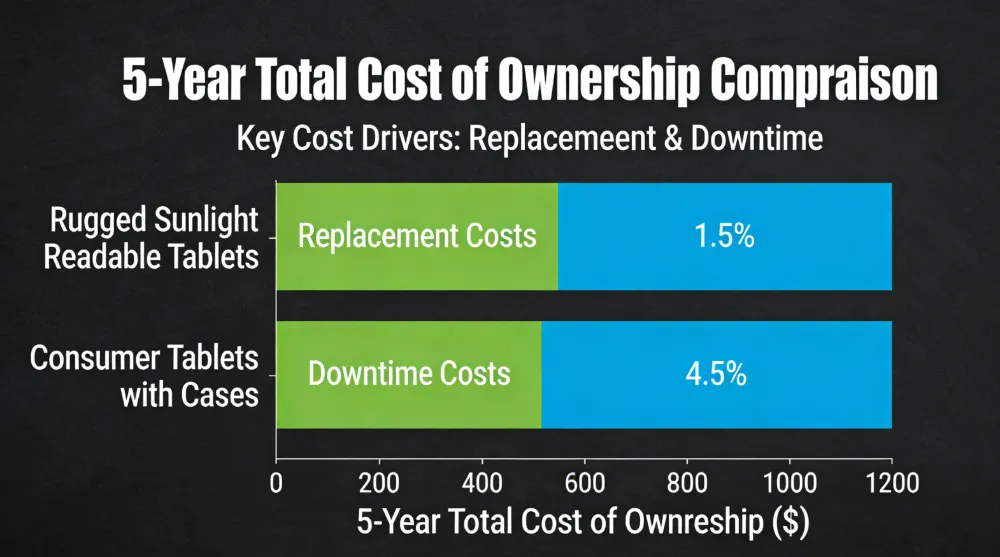
Bar chart comparing 5-year total cost of ownership between rugged sunlight readable tablets and consumer tablets with cases, highlighting replacement and downtime costs.
How to Maintain Display Performance Over Time?
Maintain performance by implementing weekly cleaning protocols with approved solutions, avoiding abrasive materials, and monitoring backlight dimming schedules via MDM.
Maintenance Protocols
- Cleaning Agents: Use only alcohol-free cleaners to prevent coating degradation on anti-glare surfaces.
- Inspection Schedule: Check for dead pixels and bonding separation every 6 months.
- Brightness Automation: Configure devices to auto-adjust brightness based on ambient light sensors to extend backlight life.
- Storage Conditions: Store spare units in climate-controlled environments to prevent battery swelling and LCD damage.
Common Failure Modes
- Delamination: Separation of glass from LCD due to extreme heat cycles.
- Backlight Bleed: Light leakage around edges indicating chassis warping.
- Touch Drift: Calibration loss due to temperature fluctuations requiring recalibration.
FAQ: 10 Questions About 10 Inches Sunlight Readable Tablets
Below are the most frequently asked questions by Procurement Specialists and IT Managers regarding specifications, durability, and compatibility.
- Is 800 nits sufficient for direct sunlight?
No, 1000 nits is the 2026 minimum standard for readable contrast in direct sun. - Does optical bonding affect touch sensitivity?
No, it typically improves sensitivity by reducing the distance between finger and sensor. - Can these tablets operate in freezing temperatures?
Yes, if rated for -20°C; standard batteries may fail below 0°C without heating elements. - How do I verify brightness claims?
Request LM-75 test reports from the manufacturer or use a calibrated lux meter. - Are sunlight readable screens heavier?
Yes, due to additional cooling layers and reinforced glass, expect 15% more weight. - Does high brightness drain battery faster?
Yes, expect 30-50% reduced battery life when running at 1000+ nits continuously. - Can I use a screen protector on bonded displays?
Only matte, anti-glare protectors; glossy ones negate the sunlight readable benefits. - What is the typical lifespan of the backlight?
Approximately 50,000 hours before brightness drops to 50% of original output. - Do these tablets support stylus input?
Most rugged 10-inch models support active stylus for signature capture in sunlight. - Is Wi-Fi performance affected by the metal chassis?
No, if external antenna ports are utilized; internal Wi-Fi may suffer slightly due to shielding.
相关推荐内容
Latest Content
- Rugged Tablets for Fleet Management: Enhance Efficiency and Durability
- Industrial Tablet Manufacturer: Durable Solutions for Harsh Environments
- Can Rugged Tablets for Forklifts Really Transform Material Handling Efficiency and Durability?
- Why Choose Rugged Tablets for Construction: A Comprehensive Guide to Durability and Performance?
- What Are the Best 10 Inch Rugged Android Tablets for Durability and Performance?
Hot product
- WMT6UQ: 6-Inch 4G Android 12 Wireless Carplay Navigator Motorcycle PND
- WT10RX: 10.1 inch rugged tablet,10.1″ sunlight-readable display,10.1" ip67 rugged tablet
- WT10MX: 10.1 inch rugged tablet 12,000 mAh,10.1″ IPS display Rugged IP65 design
- WT08Q9Y: 8 inch 10000mAh long battery rugged tablet,1000-nit rugged tablet,
- WT08M8Y: 8 inch Android 14,700-nits rugged tablet