

Bedside Terminal Solutions for Modern Healthcare Facilities
The hospital patient experience has undergone significant transformation over the past two decades. What once consisted primarily of a television and telephone at the bedside has evolved into a sophisticated ecosystem of interactive digital tools. Bedside terminals—touchscreen devices designed for individual patient use in healthcare environments—represent a critical investment in modern hospital infrastructure. These systems integrate entertainment, education, communication, and clinical information access into a single unified platform, fundamentally changing how patients engage with their care and how healthcare providers deliver services.
The global Interactive Patient Care Systems market, which encompasses bedside terminals and related technologies, was valued at US 236.2 million in 2024 and Interactive Patient Care Systems Market Seen Hitting US$ 845.4 Million by 2034, growing at a compound annual growth rate (CAGR) of 13.6% during this forecast period. This robust expansion reflects healthcare systems’ recognition that patient engagement directly impacts clinical outcomes, satisfaction scores, and operational efficiency.
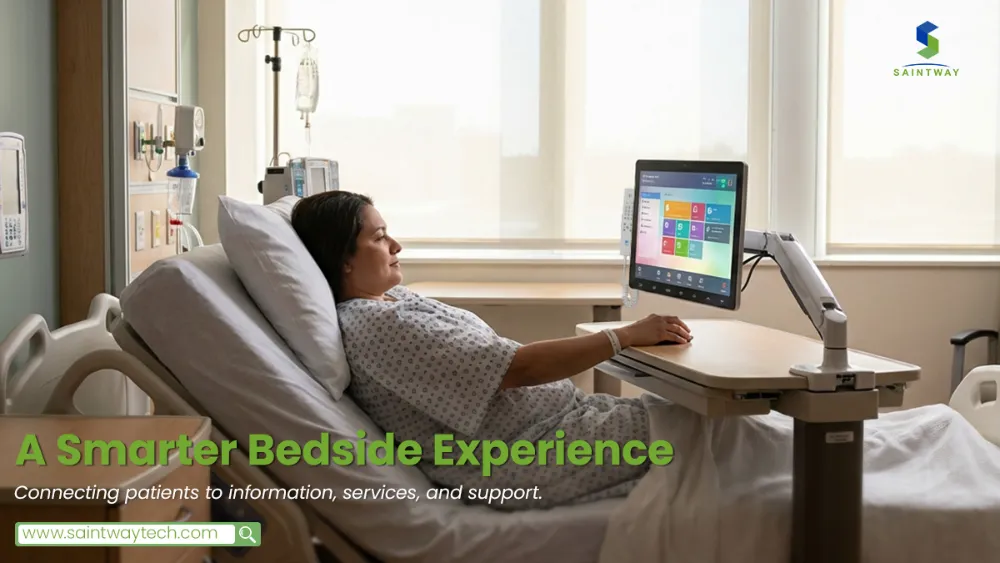
What is a Bedside Terminal? Understanding the Technology
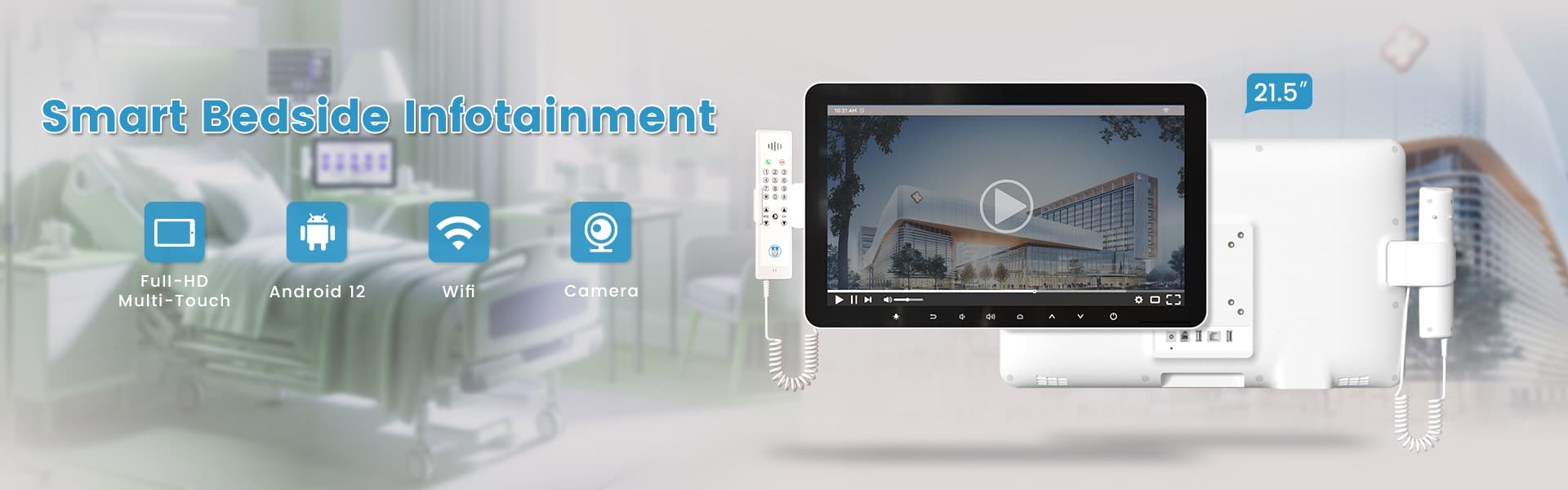
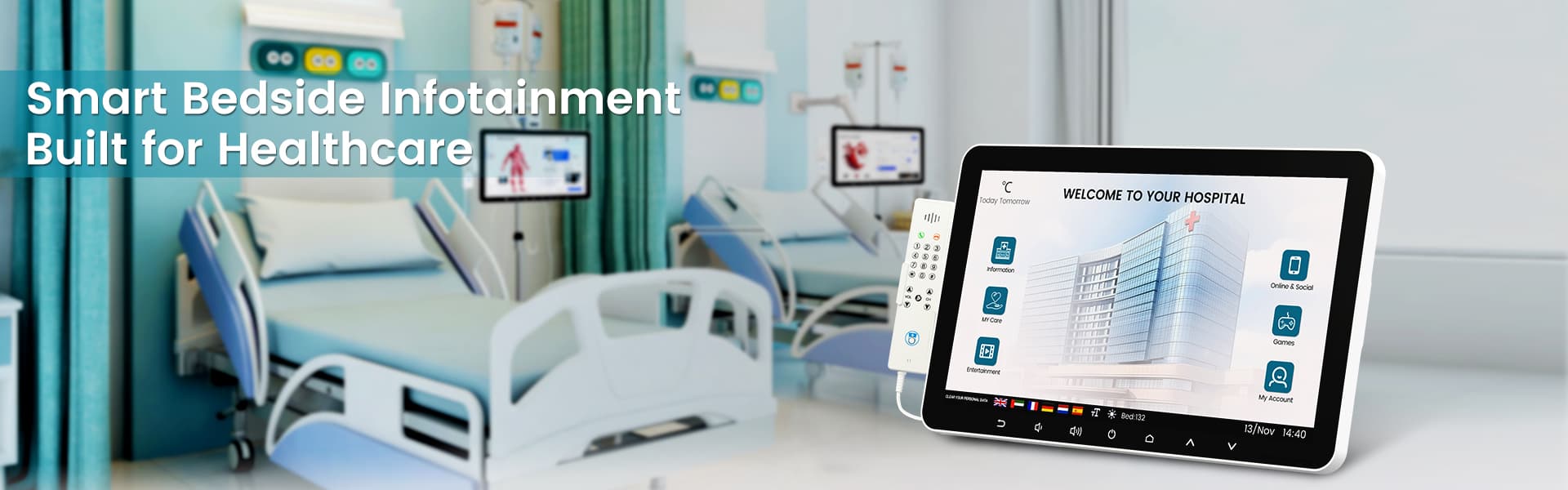
A bedside terminal is a touchscreen-based computing device positioned at or near a patient’s bed, designed to provide a comprehensive digital interface for both patients and healthcare providers. These systems typically feature display sizes ranging from 15.6 inches to 21.5 inches, with full high-definition (1920 x 1080) resolution, and multi-touch capability that enables intuitive interaction for patients of all ages and technical proficiency levels.
The hardware component dominated the Interactive Patient Care Systems market in 2024, capturing more than 57.35% of the overall component share. This reflects hospitals’ prioritization of physical infrastructure investments. Bedside terminals function as the primary touchpoint where patients interact with digital health services, making robust, reliable hardware essential to the success of comprehensive patient engagement strategies.
Unlike traditional hospital televisions and phones, modern bedside terminals integrate multiple functions seamlessly. They serve simultaneously as entertainment systems, communication devices, patient education platforms, meal ordering systems, and interfaces to electronic health records (EHRs). This consolidation of functionality reduces clutter in patient rooms while creating a unified, user-friendly experience that mirrors the digital interfaces patients use in their daily lives.
The Patient Experience: Benefits and Clinical Outcomes
For hospitalized patients, the experience of illness and recovery is inherently challenging. Patients are separated from their familiar environments, routines, and support systems at a time when they are most vulnerable. Research on bedside shift reporting—a related practice involving face-to-face communication at the patient’s bedside—has demonstrated measurable improvements in patient outcomes. A multi-unit quality improvement project utilizing structured communication protocols at the bedside reduced falls by 24% overall, with reductions exceeding 50% on specific orthopedic units, while simultaneously improving patient satisfaction scores without increasing average report time.
Bedside terminals directly support patient engagement through multiple mechanisms. First, they provide entertainment options—streaming television, radio, video-on-demand, music, and games—that help reduce the psychological stress and isolation associated with hospitalization. Second, they enable direct communication with family and friends through email, messaging, and video conferencing capabilities. Third, they offer practical self-service functions: patients can order meals according to their physician-approved dietary restrictions, control room environment settings, and summon nursing staff through integrated call systems.
Beyond these immediate comfort functions, bedside terminals serve critical educational purposes. Because modern hospital stays have shortened significantly, patients often must continue their care independently at home following discharge. Bedside terminals allow healthcare providers to deliver interactive educational content—instructional videos, procedure demonstrations, X-ray images, and medication information—directly to patients during their hospital stay. This personalized, accessible education improves patient understanding of their conditions and treatment plans, enhancing compliance with post-discharge instructions and reducing readmission rates.
The psychological impact of patient empowerment should not be underestimated. When patients feel more informed, connected, and in control of their care experience, they report higher satisfaction levels and demonstrate improved recovery trajectories. Hospitals increasingly use patient satisfaction surveys and ratings as metrics for securing funding and demonstrating quality performance. Bedside terminals directly support these institutional goals by enhancing the overall patient experience.
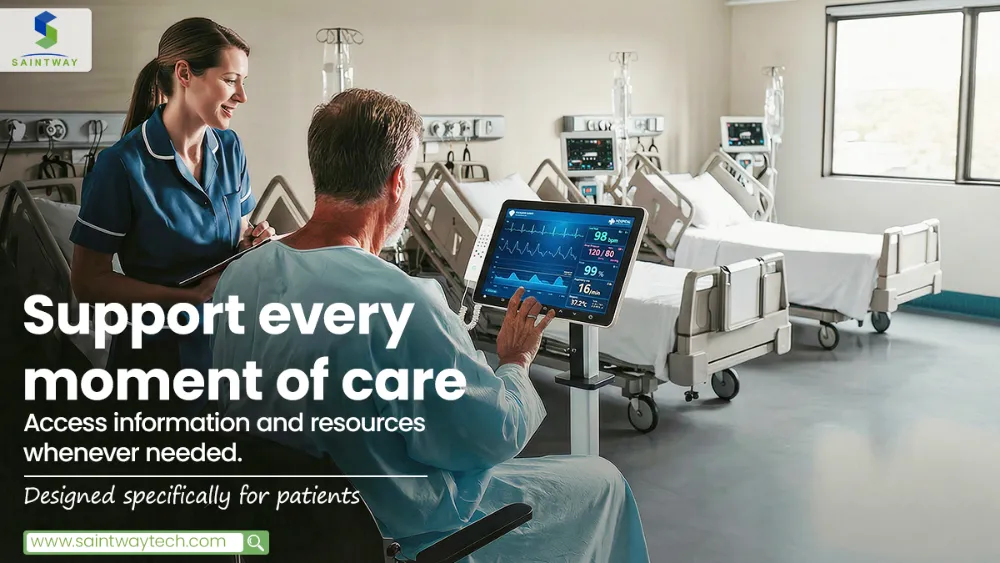
Clinical and Operational Advantages for Healthcare Providers
While bedside terminals improve the patient experience, their value to healthcare providers is equally compelling. The clinical benefits center on efficiency, accuracy, and care coordination.
Traditionally, healthcare providers—physicians, nurses, and technicians—have relied on memory and paper documentation to record patient information before returning to a computer terminal to enter data into electronic health records. This workflow creates multiple opportunities for error, delays in information availability, and inefficient use of provider time. Bedside terminals eliminate this workflow inefficiency by enabling real-time documentation at the point of care.
When a nurse completes a patient assessment, vital signs can be immediately entered into the EHR directly from the bedside terminal. Physicians can access current patient information, review diagnostic images, and review medication histories without leaving the patient’s room. This immediate access to comprehensive patient data supports better clinical decision-making and reduces the risk of medication errors or missed critical information.
The integration of bedside terminals with hospital information systems (HIS) and EHRs creates a comprehensive clinical workflow. Nurses can input vital signs, intake and output measurements, and clinical observations in real time. Physicians can e-prescribe medications, order diagnostic tests, and review results. Providers can communicate with each other through integrated messaging systems. All of this functionality reduces the administrative burden on clinical staff, freeing time for direct patient care and clinical decision-making rather than clerical tasks.
A specific case study demonstrates these benefits concretely. Jeroen Bosch Hospital (JBH), a large non-academic medical center in the Netherlands, implemented 800 bedside terminals across its facility following its relocation to a new state-of-the-art building in 2011. The hospital specifically selected this technology to enhance communication and information sharing between patients and staff. The implementation resulted in multiple documented benefits: the hospital expected to achieve approximately 50% return on investment (ROI) by offering additional services through the terminals, and projected annual cost savings of approximately US$ 100,000 per 500 occupied beds through automation of processes such as data collection, meal-plan selection, and patient communications.
Cost-Benefit Analysis: Financial and Operational Returns
Healthcare administrators evaluating bedside terminal investments typically conduct detailed cost-benefit analyses. Initial capital costs include hardware procurement, installation, network infrastructure upgrades, software licensing, and staff training. Ongoing costs include maintenance, software updates, and technical support.
The financial returns accrue through multiple mechanisms. First, operational cost reductions result from decreased manual documentation, reduced administrative staff time, and more efficient meal ordering and room management processes. The JBH case study’s projection of US$ 100,000 annual savings per 500 occupied beds provides a concrete benchmark, though actual results vary based on facility size, existing IT infrastructure, and implementation effectiveness.
Second, clinical cost reductions emerge from improved care coordination and reduced adverse events. When medication errors decrease and patient readmissions decline, healthcare systems realize substantial savings. A CDC study cited in market analysis indicates that interventions supporting better patient education and engagement can generate cost savings of up to US$ 1,814 per patient annually by reducing emergency visits and improving medication adherence.
Third, revenue generation occurs through patient satisfaction metrics that directly influence reimbursement. Value-based care models increasingly tie provider compensation to quality metrics, including patient satisfaction. Bedside terminals support higher patient satisfaction scores, directly improving institutional financial performance under these reimbursement models.
In 2024, hospitals represented the dominant end-user segment in the Interactive Patient Care Systems market, capturing more than 37.5% of market share. This leadership reflects hospitals’ recognition that bedside terminals represent essential infrastructure for modern patient-centered care delivery.
Technical Specifications and Compliance Standards
Healthcare-grade bedside terminals must meet stringent technical and regulatory requirements. Display specifications typically include sizes of 15.6, 21.5 inches with full high-definition (1920 x 1080) resolution and multi-touch integrated touchscreens. Many systems feature rotatable and tileable designs that allow caregivers to position screens optimally for charting and documentation while enabling patients to view the screen comfortably while lying down.
Infection control compliance represents a critical specification. Most medical-grade bedside terminals incorporate antibacterial coatings that inhibit microbial growth. The devices can withstand frequent cleaning with hospital-approved disinfectants and water, and can be operated with gloves—essential features in healthcare environments where infection prevention is paramount.
Medical device certification ensures electrical safety and compatibility. Bedside terminals must comply with UL/EN 60601 medical device standards, which ensure the devices do not generate electronic interference that could disrupt other medical equipment, nor are they susceptible to interference from surrounding devices. In hospital environments where patients may be connected to pacemakers, ventilators, and other life-supporting equipment, this certification is essential for patient safety.
Market Adoption and Regional Variations
In 2024, North America held a dominant market position in the Interactive Patient Care Systems market, capturing more than 44.4% of global market share. This leadership reflects the region’s advanced healthcare infrastructure, high digital literacy among both patients and providers, and strong adoption of electronic health records (EHRs).
The United States and Canada have been early adopters of bedside terminal technology. Healthcare facilities across both countries have invested substantially in upgrading patient rooms with interactive terminals and mobile integration platforms. Government initiatives supporting digital health transformation and value-based care models have encouraged this adoption. Additionally, the widespread implementation of EHRs in North American healthcare systems created natural integration points for bedside terminal technology.
According to market analysis, acute care applications dominated the application segment in 2024, capturing more than 32.4% of total market share. This reflects the widespread deployment of digital engagement tools in hospital inpatient settings. Acute care hospitals increasingly rely on interactive systems to improve patient communication, reduce readmissions, and enhance care coordination.
Post-acute care, long-term care, and home care segments are expanding their adoption of bedside terminal technology. As healthcare delivery continues to shift toward decentralized models and extended care solutions, these segments represent growing opportunities for interactive patient engagement systems.
Implementation Considerations and Best Practices
Successful bedside terminal implementation requires careful planning and execution. Healthcare organizations must conduct thorough needs assessments, evaluate available solutions, and develop comprehensive implementation strategies that address technical integration, staff training, and change management.
Technical integration with existing hospital information systems represents a critical success factor. The bedside terminal must connect seamlessly with EHRs, pharmacy systems, meal ordering systems, and nursing call systems. Poor integration creates workflow disruptions and staff frustration, undermining adoption.
Staff training is equally essential. Nurses, physicians, and administrative staff must understand how to use the system effectively in their daily workflows. Patients require instruction in using the interface, particularly older adults who may be less comfortable with touchscreen technology. Comprehensive training programs, ongoing technical support, and responsive help desk services are essential.
Change management must address the organizational and cultural dimensions of implementation. Staff may initially resist new technology, particularly if they perceive it as increasing workload rather than improving efficiency. Clear communication about benefits, visible leadership support, and demonstration of positive outcomes help overcome resistance and build adoption.
Future Trends and Emerging Technologies
The Interactive Patient Care Systems market is evolving beyond traditional bedside terminals toward more sophisticated, multi-channel engagement platforms. Artificial intelligence (AI) integration is enabling predictive analytics that anticipate patient needs, personalized content recommendations, and automated alerts for clinical decision support.
Remote patient monitoring (RPM) integration represents another significant trend. Bedside terminals increasingly sync with wearable devices, enabling clinicians to monitor vital signs, activity levels, and other health metrics beyond the hospital setting. This capability extends patient engagement from the hospital environment to home-based care, supporting the broader shift toward decentralized healthcare delivery.
Telehealth integration within bedside terminal platforms enables virtual consultations between patients and remote specialists or follow-up visits after discharge. This functionality supports continuity of care and reduces unnecessary hospital readmissions.
Mobile applications and patient portals are increasingly integrated with bedside terminal systems, creating seamless experiences that extend from hospital to home. Patients can access care plans, receive medication reminders, track progress, and communicate with providers through multiple channels.
Conclusion
Bedside terminals represent far more than entertainment devices in modern hospitals. They function as essential infrastructure supporting patient engagement, clinical efficiency, and operational cost management.
The benefits are multifaceted: improved patient satisfaction and clinical outcomes, enhanced care coordination and reduced medical errors, operational cost savings, and better alignment with value-based care models. For healthcare providers committed to patient-centered care delivery, bedside terminal implementation represents a strategic investment in both quality and financial sustainability.
As healthcare continues its digital transformation, bedside terminals will evolve from primarily entertainment and communication devices into sophisticated, AI-enabled platforms that support comprehensive patient engagement across the entire care continuum. Healthcare organizations that embrace this evolution will be well-positioned to deliver superior patient experiences while achieving their operational and financial objectives.
Data Sources:
- Market.us Interactive Patient Care Systems Market Report (2024-2025)
- HHM Global – Jeroen Bosch Hospital Case Study
- Teguar Computers – Healthcare Bedside Terminal Benefits
- NRC Health – Bedside Shift Report Research
相关推荐内容
Latest Content
- Rugged Tablets for Fleet Management: Enhance Efficiency and Durability
- Industrial Tablet Manufacturer: Durable Solutions for Harsh Environments
- Can Rugged Tablets for Forklifts Really Transform Material Handling Efficiency and Durability?
- Why Choose Rugged Tablets for Construction: A Comprehensive Guide to Durability and Performance?
- What Are the Best 10 Inch Rugged Android Tablets for Durability and Performance?
Hot product
- WMT6UQ: 6-Inch 4G Android 12 Wireless Carplay Navigator Motorcycle PND
- WT10RX: 10.1 inch rugged tablet,10.1″ sunlight-readable display,10.1" ip67 rugged tablet
- WT10MX: 10.1 inch rugged tablet 12,000 mAh,10.1″ IPS display Rugged IP65 design
- WT08Q9Y: 8 inch 10000mAh long battery rugged tablet,1000-nit rugged tablet,
- WT08M8Y: 8 inch Android 14,700-nits rugged tablet