Advanced Bedside Terminal Solutions: The Backbone of Modern Patient Care
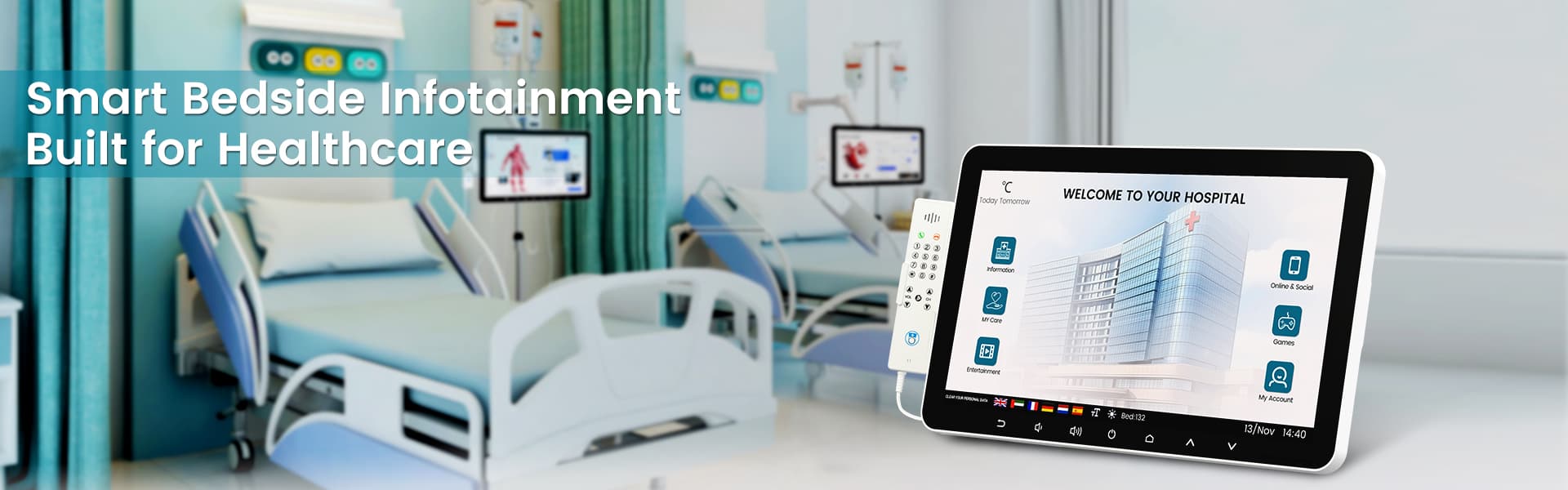
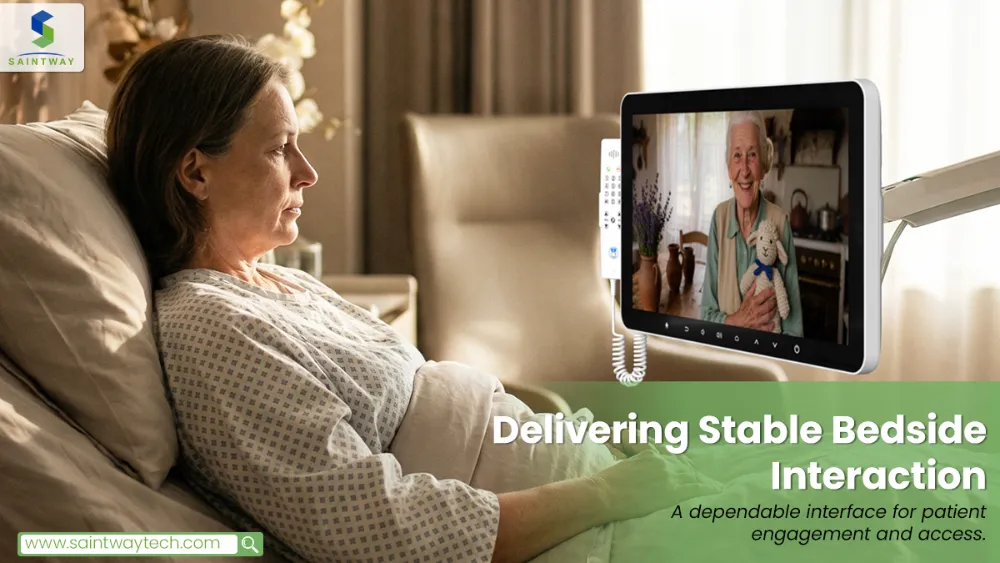
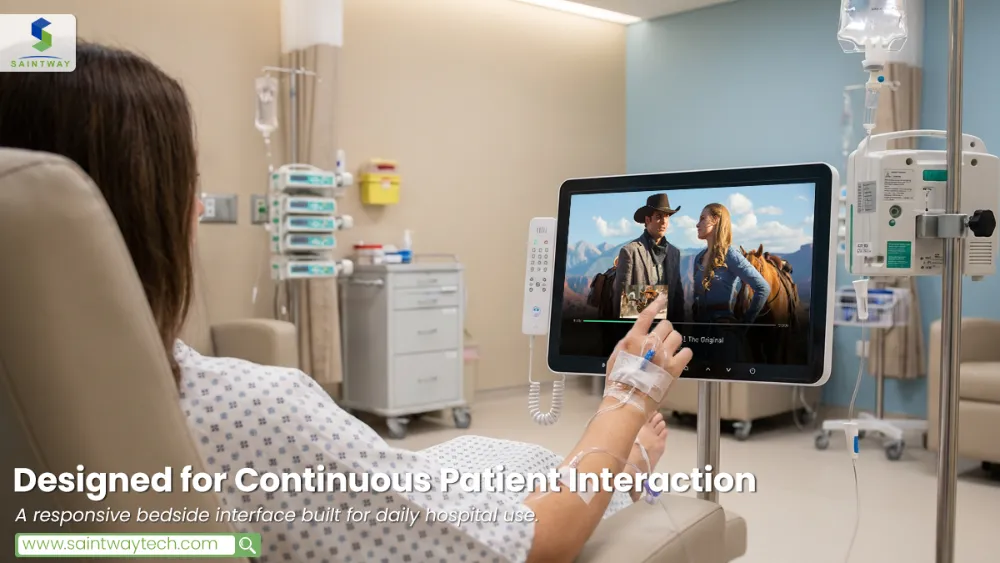
The digital transformation of healthcare is no longer a future concept; it is the current operational reality. At the center of this shift stands the bedside terminal. Far more than a simple display, these devices serve as the critical interface between medical staff, patient data, and hospital infrastructure.
For healthcare IT directors, facility managers, and OEM/ODM partners, selecting the right bedside terminal is a complex decision involving hardware durability, software integration, and long-term total cost of ownership (TCO). This guide breaks down the technical requirements, design considerations, and customization strategies for advanced bedside terminal solutions.
Why “Advanced” Matters: Beyond Basic Displays
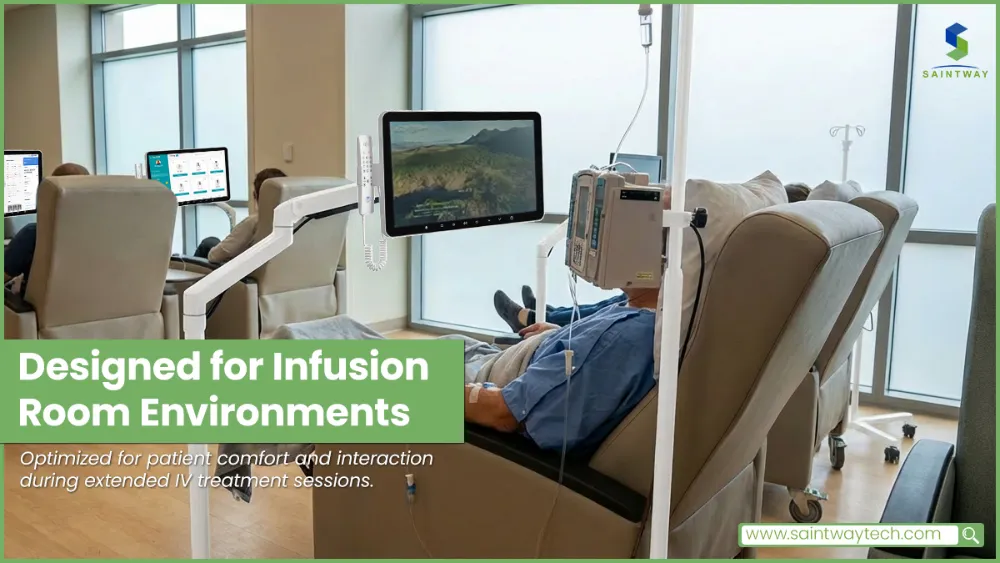
Traditional bedside monitors are static. Advanced bedside terminals are dynamic, interactive, and secure endpoints. They must handle high-frequency data exchange, support multiple concurrent users, and withstand the harsh realities of a hospital environment.
Key differentiators of an advanced solution include:
- Ruggedized Hardware: Resistance to cleaning agents, accidental drops, and dust.
- Modular Connectivity: Support for HDMI, USB-C, Ethernet, and specialized medical device ports.
- Secure Boot & Encryption: Hardware-level security to protect PHI (Protected Health Information).
- Long Lifecycle Support: Predictable hardware replacement cycles to align with software updates.
Core Technical Specifications for Bedside Terminals
When evaluating or customizing a bedside terminal, specific technical parameters define its suitability for clinical use. Below is a breakdown of critical specifications that B2B buyers should prioritize.
1. Display Technology and Visibility
Patient and staff visibility is paramount.
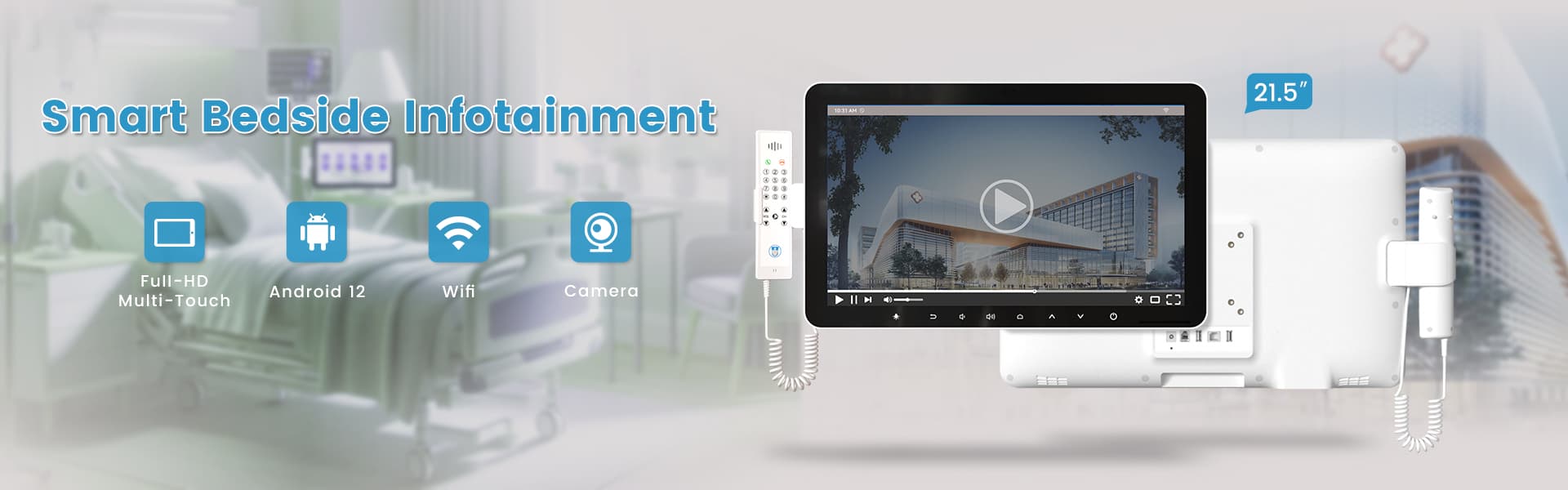
- Size: Typically 21.5” to 32” for bedside use. Larger screens allow for detailed charting and medication administration records (MAR).
- Resolution: Full HD (1920×1080) is the minimum standard; 4K is preferred for diagnostic imaging integration.
- Brightness: High brightness (300–500 nits) is essential for rooms with ambient light, while anti-glare coatings prevent eye strain.
- Touch Capability: Capacitive multi-touch is standard, but resistive touch may be required in environments where gloves are frequently worn.
2. Processing Power and Memory
Bedside terminals run resource-intensive EMR (Electronic Medical Record) systems, video conferencing for telehealth, and patient entertainment apps simultaneously.
- Processor: Intel Core i5 or i7 (10th Gen+) for smooth multi-tasking.
- RAM: 16GB minimum, 32GB recommended for heavy virtualization or local data processing.
- Storage: NVMe SSDs (512GB+) for fast boot times and reliable data integrity.
3. Connectivity and Peripherals
- Ports: USB 3.0/3.1 for barcode scanners and biometric readers; HDMI/DisplayPort for external monitors; RJ45 Gigabit Ethernet for stable network connections.
- Wireless: Wi-Fi 6 and Bluetooth 5.0 for connecting patient wristbands, smart scales, and nurse call systems.
- Power: PoE (Power over Ethernet) support is a growing preference to reduce cable clutter and simplify installation.
4. Ruggedness and Durability
Hospital environments are hostile to consumer electronics.
- Ingress Protection: IP65 or higher to protect against dust and water jets from cleaning procedures.
- Drop Resistance: MIL-STD-810G certification for shock and vibration resistance.
- Housing: Medical-grade ABS or polycarbonate with antimicrobial coatings to reduce surface bacteria.
OEM/ODM Customization: Tailoring to Your Brand
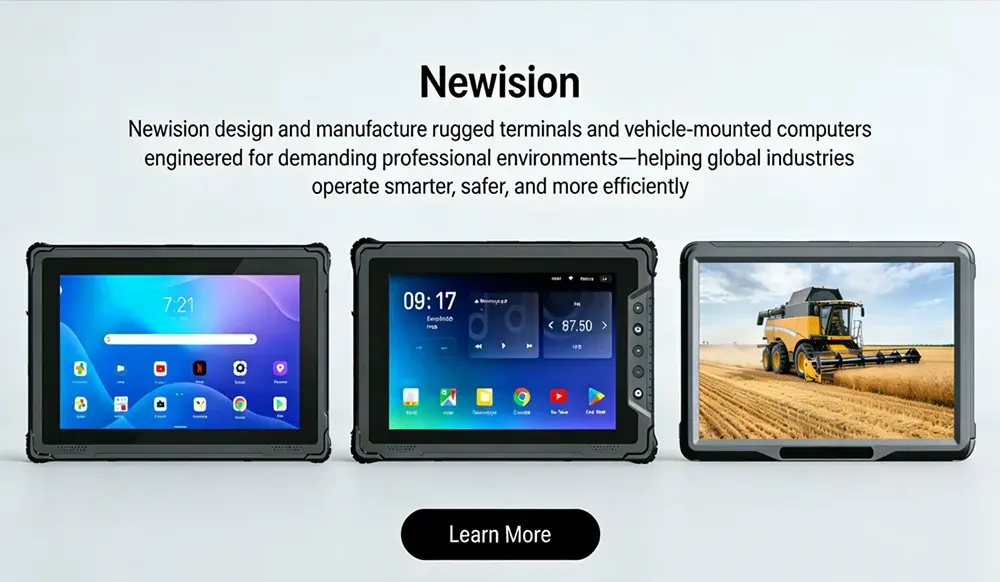
For brand owners and distributors, off-the-shelf units often lack specific integrations. Newision offers comprehensive OEM/ODM services to create bedside terminals that fit your exact workflow.
Customization Options
- Hardware Integration: Embedding specific sensors, barcode scanners, or RFID readers directly into the chassis.
- Branding & Design: Custom logo placement, color-coded bezels for different departments (e.g., blue for ICU, green for general ward), and custom mounting brackets (wall, pole, or cart).
- Software Pre-loading: Factory installation of secure boot environments, specific EMR drivers, or kiosk modes to prevent unauthorized access.
- Certification Support: Assistance in obtaining CE, FCC, and RoHS certifications for specific regional markets.
Why Choose Newision for Bedside Terminals?
- Vertical Integration: We control the entire supply chain from component sourcing to final assembly, ensuring quality and cost efficiency.
- Medical-Grade Focus: Our engineering team specializes in healthcare IoT, understanding the specific reliability and security needs of the sector.
- Scalable Production: From prototype development to mass production of 10,000+ units, we support flexible order quantities.
Comparison: Advanced Bedside Terminals vs. Consumer Tablets
| Feature | Advanced Bedside Terminal | Consumer Tablet |
|---|---|---|
| :— | :— | :— |
| Durability | MIL-STD rated, IP65, antimicrobial | Consumer grade, fragile |
| Connectivity | Gigabit Ethernet, PoE, dedicated medical ports | Wi-Fi/Bluetooth only |
| Security | Hardware TPM, Secure Boot, BIOS lock | Standard consumer security |
| Support | 5-7 year lifecycle, spare parts guaranteed | 1-2 year warranty, hard to repair |
| Integration | Seamless with hospital infrastructure | Limited driver support |
Implementation Best Practices
- Pilot Program: Deploy a small batch (10-20 units) in a single ward to test integration with existing EMR systems.
- Network Infrastructure: Ensure your hospital network supports the bandwidth requirements of video telehealth and high-resolution imaging.
- Maintenance Strategy: Establish a routine for screen cleaning and hardware inspection. Ruggedized units still require care to maintain IP ratings.
- User Training: Train staff on the specific interface and troubleshooting steps to maximize adoption.
FAQ
Q: What is the average lifespan of a bedside terminal?
A: High-quality medical-grade bedside terminals typically have a lifecycle of 5 to 7 years, depending on usage intensity and maintenance.
Q: Can bedside terminals support telehealth video calls?
A: Yes. Advanced models are equipped with high-resolution cameras, microphones, and sufficient processing power to support HD video conferencing for remote consultations.
Q: Do you offer customization for specific mounting requirements?
A: Yes. Newision provides custom VESA mounts, wall brackets, and mobile cart integrations to suit different room layouts and mobility needs.
Q: Is PoE (Power over Ethernet) supported?
A: Many of our advanced models support PoE+ (802.3at) to simplify power delivery and reduce the need for separate power adapters in the room.
Conclusion: Invest in Reliable Patient Care Infrastructure
The bedside terminal is more than a piece of hardware; it is a critical node in your healthcare ecosystem. Choosing an advanced, ruggedized, and customizable solution ensures data security, operational efficiency, and long-term value.
Ready to customize your bedside terminal solution?
Partner with Newision for end-to-end OEM/ODM services. From concept to mass production, we deliver reliable, medical-grade devices tailored to your specifications.
[Contact Our Engineering Team for a Custom Quote]
相关推荐内容
Latest Content
- Bedside Terminal Selection Guide: Key Specs, Benefits & OEM Solutions for Hospitals
- Fleet Management Canada: 2026 Guide to Telematics & Compliance
- Rugged Tablets for Taxi Fleets: 2026 Selection Guide & TCO Analysis
- Rugged Tablet for Digital Mining: The Essential Guide to Durability in the Field
- Sunlight Readable Tablet: The Ultimate Guide to Choosing the Right Display for Outdoor Work
Hot product
- WMT6UQ: 6-Inch 4G Android 12 Wireless Carplay Navigator Motorcycle PND
- WT10RX: 10.1 inch rugged tablet,10.1″ sunlight-readable display,10.1" ip67 rugged tablet
- WT10MX: 10.1 inch rugged tablet 12,000 mAh,10.1″ IPS display Rugged IP65 design
- WT08Q9Y: 8 inch 10000mAh long battery rugged tablet,1000-nit rugged tablet,
- WT08M8Y: 8 inch Android 14,700-nits rugged tablet