How to Choose Sunlight Readable Rugged Tablet
In the rapidly evolving landscape of 2026, field operations across industries—from renewable energy maintenance to emergency response—demand more than just a “tough” computer. As digital transformation reaches the deepest corners of the “outdoor office,” the bottleneck is no longer processing power, but visibility. Choosing a sunlight-readable rugged tablet is a critical decision that impacts worker productivity, safety, and long-term hardware ROI.
This guide provides a deep dive into the technical specifications and market data you need to select a device that remains clear under the harshest solar glare.
1. Decoding Luminance: Why 1000 Nits is the New Baseline for 2026
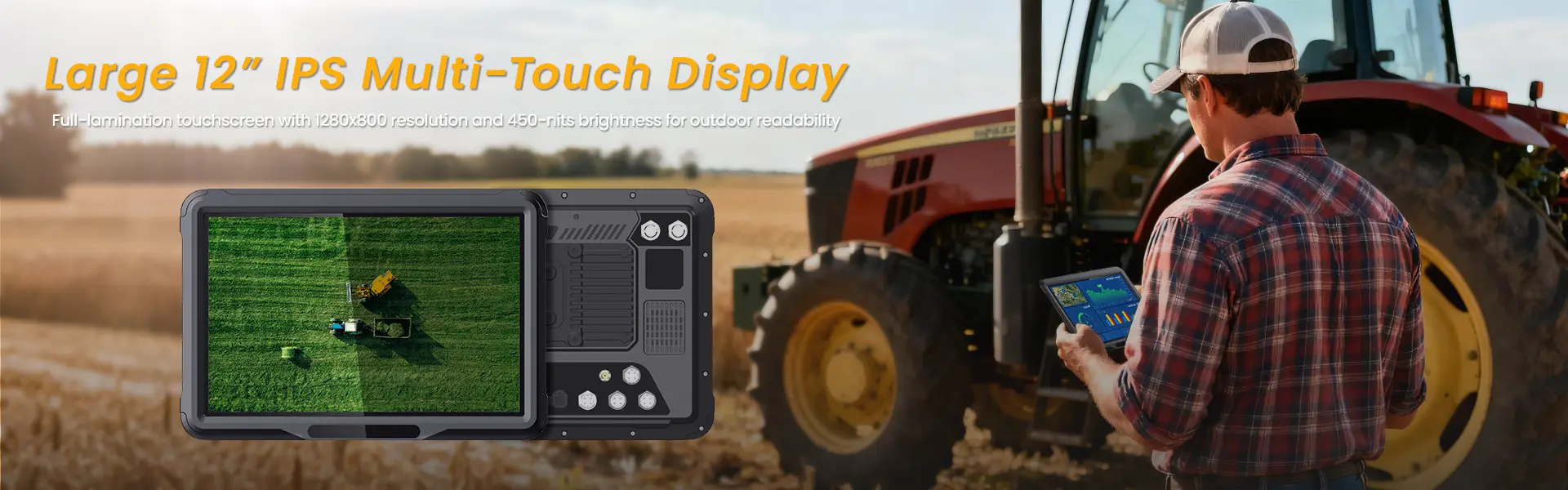
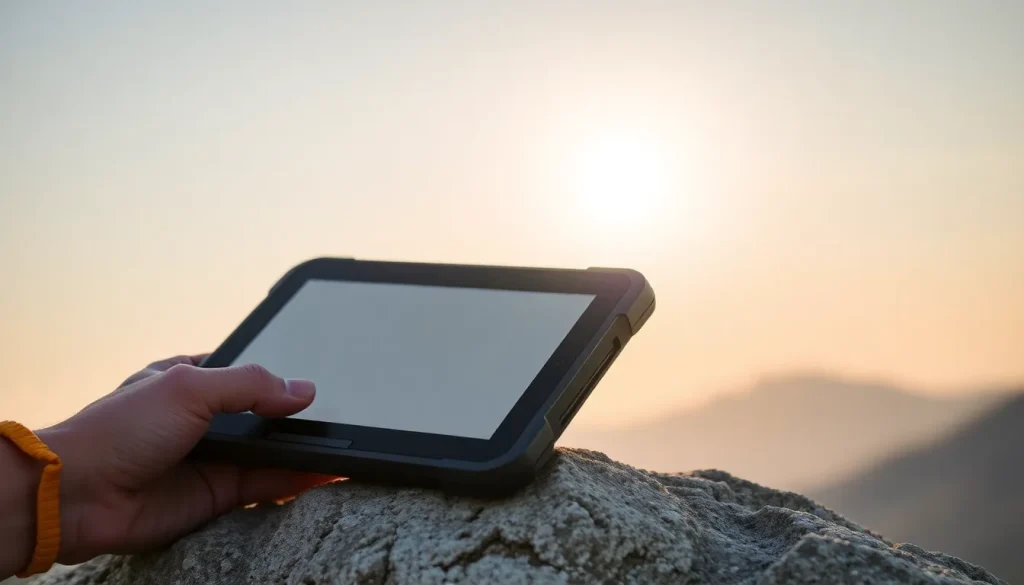
In years past, a 500-nit screen was marketed as “outdoor viewable.” However, real-world data from 2024–2025 field studies has proven this insufficient for direct midday sun, which can reach ambient brightness levels of over 10,000 to 100,000 lux.
Luminance is measured in nits (candela per square meter). For a display to be truly “sunlight readable,” it must achieve a contrast ratio of at least 5:1 in high ambient light. By 2026 standards, the industry has shifted:
- Office/Indoor: 200–300 nits.
- Shadowed Outdoor: 500–700 nits.
- Direct Sunlight: 1,000+ nits is now the professional gold standard.
When evaluating tablets, look for “sustained brightness” rather than “peak brightness.” Many consumer-grade devices can hit 1,000 nits for a few minutes but drop to 400 nits once the hardware heats up. True rugged tablets, like the latest 2026 models from top-tier manufacturers, use high-efficiency LED backlights designed to maintain 1,200 to 1,500 nits throughout an entire shift.
2. Optical Bonding vs. Air Gap: The Science of Reducing Internal Reflection
Brightness alone does not guarantee readability. A common mistake is buying a high-nit tablet that lacks Optical Bonding.
In a traditional display, there is a small air gap between the LCD panel and the protective cover glass. This gap creates two extra reflective surfaces, causing about 4.5% reflection at each interface. In bright sunlight, these internal reflections wash out the image, regardless of how bright the backlight is.
Optical Bonding involves filling the gap with a specialized optical-grade resin (OCR or OCA). This process:
- Reduces internal reflection by up to 90%.
- Improves the Contrast Ratio by 300% in high-light environments.
- Eliminates internal moisture or “fogging” within the screen.
- Enhances physical durability by making the screen assembly a solid block.
In 2026, the global rugged tablet market (projected to reach $6.47 billion) has seen a nearly 62% adoption rate for fully bonded displays in the industrial sector. If the spec sheet doesn’t explicitly mention “Full Lamination” or “Optical Bonding,” the device will likely struggle in the field.
3. Surface Treatments: Balancing Anti-Glare (AG) and Anti-Reflective (AR) Coatings
To combat the external light hitting the screen, two distinct technologies are used. A professional sunlight-readable tablet should ideally combine both:
- Anti-Glare (AG): This is a physical etching of the glass surface. It scatters incoming light (diffuse reflection), preventing the “mirror effect” of the sun or overhead lights. Modern 2026 tablets use Nano-etching, which provides the matte effect without the “sparkle” or graininess seen in older AG screens.
- Anti-Reflective (AR): This is a thin-film coating (often multiple layers) that uses destructive interference to cancel out reflected light. While AG scatters light, AR actually allows more light to pass through the glass to the user’s eye.
Data shows that a tablet with an AR/AG combination can reduce surface reflectance to less than 1.5%, compared to 8-10% for untreated glass.
4. Thermal Management: Preventing Performance Throttling Under Direct Sun
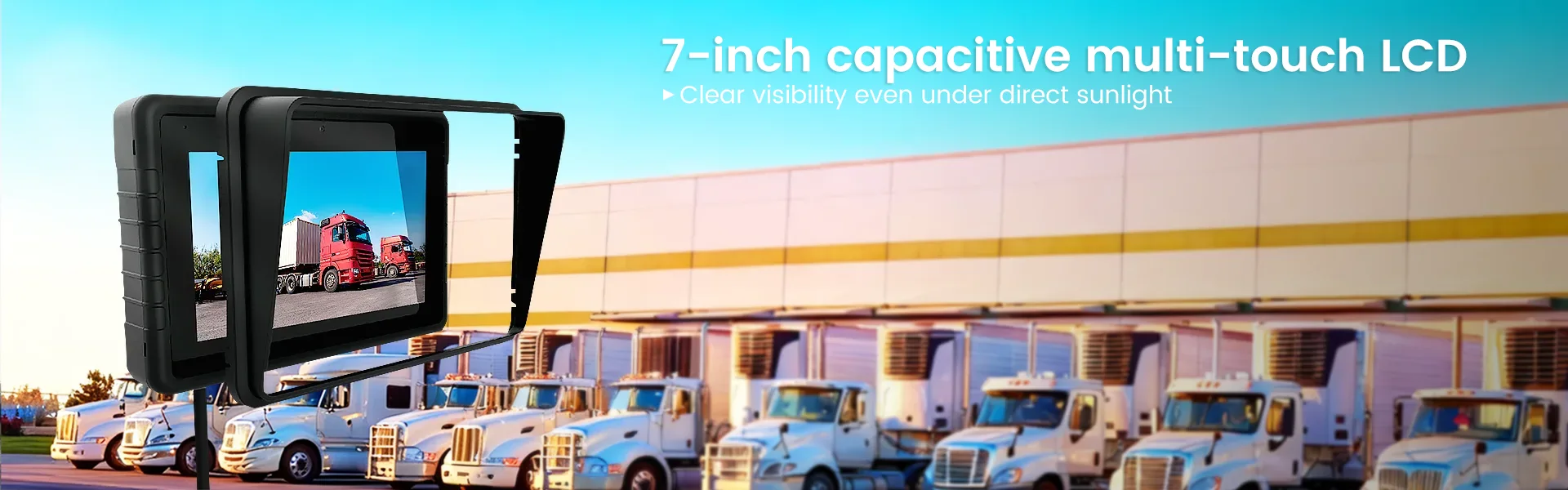
A high-brightness screen generates significant heat. When combined with 35°C (95°F) ambient temperatures and direct solar radiation, a tablet’s internal temperature can skyrocket.
Most consumer tablets will enter “thermal throttling” mode, dimming the screen to 20% or even shutting down to protect the battery. Professional rugged tablets in 2026 utilize Active Thermal Management or advanced Heat Pipe cooling.
- Data Point: High-end rugged tablets are tested to operate at full 1000-nit brightness in temperatures up to 60°C (140°F) without dimming.
- Tip: Check the “Operating Temperature” specs. Look for devices that specify “Performance at Max Brightness” within their thermal range.
5. Touchscreen Intelligence: Glove, Rain, and Stylus Compatibility
Sunlight readability is useless if you can’t interact with the device. Outdoor environments involve sweat, rain, and gloves.
The latest generation of Projected Capacitive (PCAP) touchscreens includes dedicated firmware modes:
- Glove Mode: Increases sensitivity to detect inputs through thick work gloves.
- Rain/Water Mode: Uses advanced algorithms to ignore “false touches” caused by raindrops while still responding to a finger or stylus.
- Digitizer Support: For precision tasks like digital signatures or mapping, a tablet with an Active Digitizer provides much higher accuracy than a standard capacitive stylus.
8. The Total Cost of Ownership (TCO): ROI of Sunlight-Readable Technology
While a sunlight-readable rugged tablet may have a higher upfront cost (often 2-3x a consumer tablet), the Total Cost of Ownership (TCO) is significantly lower.
| Feature | Consumer Tablet | Rugged Sunlight-Readable (2026) |
| Visibility | Poor (Reflective) | Excellent (1200 Nits + Bonding) |
| Failure Rate | 15-25% annually | <3% annually |
| Lifecycle | 1-2 years | 5-7 years |
| Productivity Loss | High (due to squinting/retyping) | Low (Optimized for field use) |
According to 2025-2026 market analysis, organizations that switched to specialized sunlight-readable hardware reported a 20% increase in field worker efficiency and a 40% reduction in device replacement costs over a 3-year period.
Conclusion
When choosing your next rugged tablet, prioritize the “Trinity of Visibility”: 1000+ Nits of Luminance, Optical Bonding, and AR/AG Coatings. By ensuring these technical boxes are checked, you aren’t just buying a screen; you are investing in a tool that empowers your workforce to perform anywhere the sun shines.
Follow-up Question:
Are you looking for a tablet for a specific industry, such as construction, maritime, or logistics, so I can provide more tailored hardware recommendations?
相关推荐内容
Latest Content
- Mobile Device Management (MDM) Solutions: The Complete Guide for 2026
- Rugged Tablet for Mining: Specs, Comparison & Buyers Guide
- Rugged Tablet for Fleet Management: The 2026 Guide to Choosing the Right Device
- Tablet Management for Trucking Fleets 2026 – Best Practices, Software & ROI Guide
- Is an 8-Inch Android Tablet Worth Buying in 2026?
Hot product
- WMT6UQ: 6-Inch 4G Android 12 Wireless Carplay Navigator Motorcycle PND
- WT10RX: 10.1 inch rugged tablet,10.1″ sunlight-readable display,10.1" ip67 rugged tablet
- WT10MX: 10.1 inch rugged tablet 12,000 mAh,10.1″ IPS display Rugged IP65 design
- WT08Q9Y: 8 inch 10000mAh long battery rugged tablet,1000-nit rugged tablet,
- WT08M8Y: 8 inch Android 14,700-nits rugged tablet