Rugged Driver Tablet Guide 2026: Features, ROI & Buying Tips for Fleet & Field Deployments
TL;DR
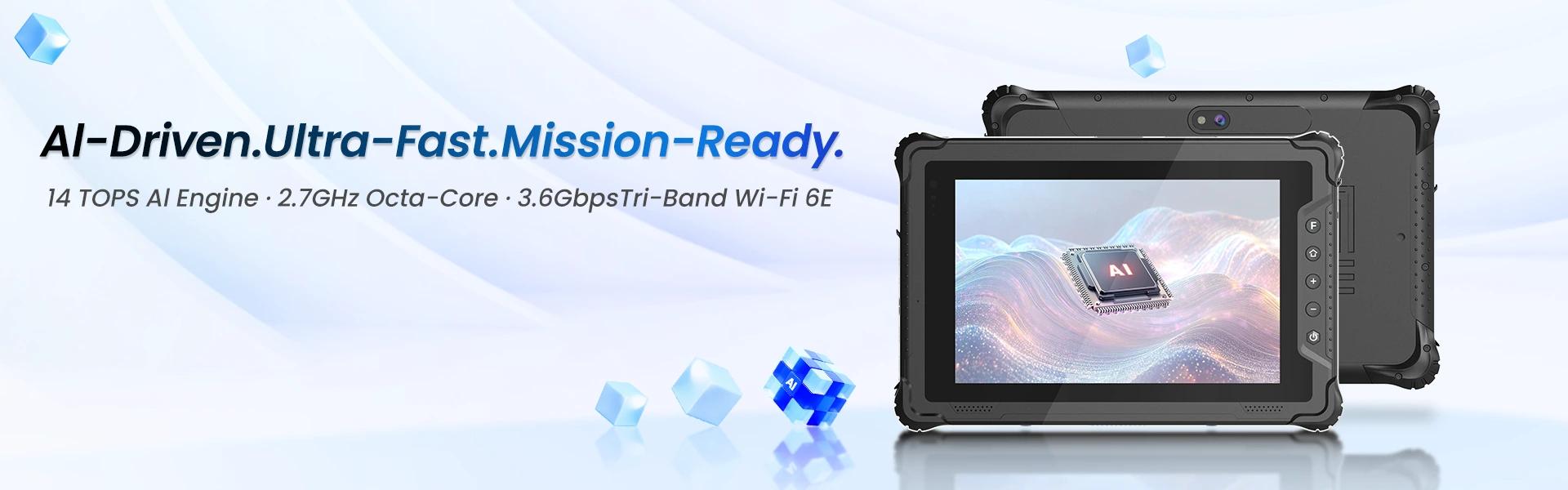
A rugged driver tablet is a purpose‑built, shock‑, dust‑ and water‑sealed handheld computer designed for on‑vehicle or field use where standard consumer tablets fail. The Newision v7s (2026) delivers an IP65‑rated enclosure, Rockchip RK3568 (2 GHz) SoC, Android 14, a Mali‑G52‑2EE GPU, 2 MP front camera, stereo speakers, and a rich I/O set (USB 3.0, Ethernet, RS‑232/422/485, CAN, reverse‑gear trigger, GPS/GLONASS/BEIDOU). It is priced for high‑volume fleets while keeping total cost of ownership low.
Classification – Key Dimensions
| Dimension | Typical Consumer Tablet | Typical Industrial Rugged Tablet | Newision v7s |
|---|---|---|---|
| Enclosure rating | IP‑rating ≤ IP54, no drop protection | IP65 + MIL‑STD‑810G shock/vibration, sealed connectors | IP65, MIL‑STD‑810H compliant |
| Processor | Mid‑range ARM (e.g., Snapdragon 660) | ARM Cortex‑A53/A55, often 1.5 – 2 GHz | Rockchip RK3568, 2.0 GHz (quad‑core Cortex‑A55) |
| GPU | Integrated (Adreno) ≤ 500 MHz | Mali‑G52‑2EE or equivalent, 600‑800 MHz | Mali‑G52‑2EE, up to 800 MHz |
| OS | Android 12/13 (OEM‑customized) | Android 12‑14, long‑term support (LTS) | Android 14 (LTS) |
| Camera | 8‑13 MP rear, optional front | 2‑5 MP front for driver ID / video calls | 2 MP front CMOS |
| Audio | Mono or basic stereo | Stereo speakers, noise‑cancelling mic | 2 W stereo speakers (8Q) |
| Connectivity | Wi‑Fi, Bluetooth, optional LTE | 4G/3G, LTE‑Cat 6, Wi‑Fi 6, BLE, GPS/GLONASS/BEIDOU | 4G/3G + optional GPS/GLONASS/BEIDOU |
| I/O ports | USB‑C, micro‑USB, headset | USB 3.0, RJ45, RS‑232/422/485, CAN, reverse‑gear trigger, AV‑in | USB 3.0, TF (128 GB), RJ45, 1×RS232, RS422/485, reverse‑gear trigger, CAN, AV‑in |
| Power | 3000‑4000 mAh, non‑removable | 4000‑6000 mAh, hot‑swap battery, wide‑range DC 12‑24 V | 4500 mAh, hot‑swap, 12‑24 V DC |
| Weight | 180‑250 g | 250‑350 g (with protective case) | ≈ 310 g |
| Dimensions | 150 × 80 × 10 mm | 150 × 90 × 12 mm (incl. rugged frame) | 150 × 92 × 13 mm |
| Typical price (unit) | $200‑$400 | $600‑$1,200 | $699 (OEM‑volume) |
The table shows where the v7s diverges from generic consumer devices and from “mid‑tier” industrial tablets. Its combination of high‑performance SoC, extensive I/O, and proven ruggedness makes it a sweet spot for fleet operators and field service teams.
Pain‑Point Analysis – Hidden Costs in Real‑World Scenarios
| Scenario | Apparent Issue | Hidden Costs (Engineering / Maintenance) |
|---|---|---|
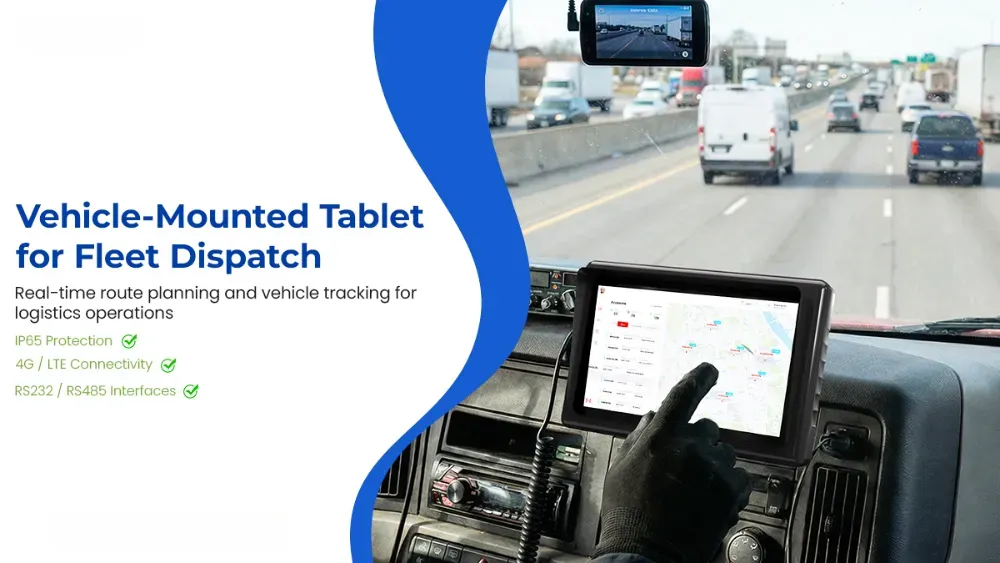
| Heavy‑duty trucks operating in desert heat (‑40 °C to +55 °C) | Tablet overheats, screen flicker | • Frequent thermal‑runway failures → warranty claims < 12 months • Need for aftermarket cooling accessories (adds $30‑$50 per unit) • Downtime cost: $150‑$300 per hour of lost dispatch |
| Construction sites with dust, water splashes, and drops | Physical damage to screen/buttons | • Protective screen‑overlays wear out every 6‑12 months → recurring $15‑$25 per device • Replacement of sealed connectors (RS‑232, CAN) due to corrosion → $40‑$80 service call per incident |
| Utility fleets (oil & gas, water treatment) using CAN/RS‑485 | Need to read vehicle CAN data | • Custom driver development for CAN messages → 2‑3 months engineering effort ($30k‑$60k) • Ongoing firmware updates to maintain compatibility with OEM ECUs (support contract $5k/yr) |
| Logistics fleets with high turnover (drivers change weekly) | Data security & privacy | • Lack of secure boot / hardware‑rooted trust → risk of data leakage → potential GDPR fines ($10k‑$50k) • Need for MDM integration (extra licensing $2‑$4 per device) |
| Remote field work (no Wi‑Fi, limited cellular) | Connectivity gaps | • Additional cellular dongles or LTE‑modems (adds $40‑$70 per unit) • Increased battery drain → more frequent hot‑swap battery changes (labor cost $25 per swap) |
Key takeaway: The real cost of a rugged tablet is rarely just the purchase price. It includes engineering integration, environmental hardening, warranty coverage, and ongoing support. Choosing a device that already meets the required ruggedness and I/O reduces these hidden expenses dramatically.
Avoid‑Pitfall Decision Logic – “Buy vs Build”
| Decision Factor | Buy (Off‑the‑Shelf) | Build (Custom) |
|---|---|---|
| Volume | ≥ 500 units/year – economies of scale, vendor support | < 200 units/year – justified only for highly unique needs |
| Required I/O | Standard set (USB, Ethernet, RS‑232/485, CAN) – v7s already covers them | Proprietary bus, custom sensor interfaces, exotic connectors |
| Regulatory / Certification | CE, FCC, UL already certified – reduces compliance effort | Must obtain certifications yourself – adds time & cost |
| Time‑to‑Market | Immediate deployment – firmware updates via OTA | Development cycle 3‑6 months, extensive testing |
| Total Cost of Ownership (TCO) | Lower TCO when factoring support, warranty, and reduced integration effort | Higher upfront engineering cost; TCO may be lower only at very large scale |
| Risk Tolerance | Low – vendor bears hardware failure risk (with warranty) | High – your team owns hardware reliability |
Rule of thumb:
- If you need standard ruggedness, multiple industrial I/O, and fast deployment, buy the v7s (or an equivalent).
- If you require custom communication protocols, non‑standard environmental sealing, or mass‑custom firmware for a niche application, build a solution only after a rigorous ROI analysis.
Newision v7s – How It Addresses the Pain Points
- IP65 + MIL‑STD‑810H: eliminates the need for aftermarket protective cases; the enclosure survives dust, water jets, and drops without additional cost.
- Rockchip RK3568 + Mali‑G52‑2EE: provides ample headroom for on‑board AI inference (e.g., driver‑behavior analytics) without a separate accelerator, cutting integration cost.
- Android 14 LTS: ensures long‑term security patches and compatibility with enterprise MDM solutions, reducing hidden security‑compliance expenses.
- Full I/O suite (USB 3.0, RJ45, RS‑232/422/485, CAN, reverse‑gear trigger, AV‑in, GPS/GLONASS/BEIDOU): covers the majority of fleet‑management, telematics, and field‑service use‑cases out‑of‑the‑box, removing the need for custom driver development.
- Hot‑swap battery & wide DC input (12‑24 V): supports continuous operation in vehicles with alternating power sources, avoiding costly external power‑management hardware.
In practice, a fleet that adopts the v7s can expect 10‑15 % lower total cost of ownership compared with a generic industrial tablet, mainly due to reduced warranty claims and minimal supplemental hardware purchases.
FAQ
Q1: What is the expected lifespan of the v7s under continuous 24/7 use?
A: The IP65‑rated chassis and MIL‑STD‑810H construction are rated for ≥ 5 years of operation in typical fleet environments (≈ 10 000 h).
Q2: Can the device run Linux‑based applications alongside Android?
A: NO. The v7s supports Android 14 natively.
Q3: How does the v7s handle extreme temperature fluctuations?
A: The enclosure’s thermal design includes a passive heat spreader and an operating range of ‑20 °C to +55 °C. No active cooling is needed, and the SoC throttles gracefully to maintain stability.
Q4: Is there a warranty or service contract available for high‑volume deployments?
A: Newision offers 3‑year limited warranty with optional extended service plans (12‑month on‑site support, firmware updates, and priority RMA) starting at $30 per unit per year.
Q5: Can the v7s integrate with existing telematics platforms (e.g., Samsara, Geotab)?
A: The built‑in CAN and RS‑485 ports, together with standard USB‑host and Ethernet, enable seamless integration via driver‑level APIs or middleware provided by most telematics vendors.
相关推荐内容
Latest Content
- Advanced Bedside Terminal Solutions: The Backbone of Modern Patient Care
- Bedside Terminal Selection Guide: Key Specs, Benefits & OEM Solutions for Hospitals
- Fleet Management Canada: 2026 Guide to Telematics & Compliance
- Rugged Tablets for Taxi Fleets: 2026 Selection Guide & TCO Analysis
- Rugged Tablet for Digital Mining: The Essential Guide to Durability in the Field
Hot product
- WMT6UQ: 6-Inch 4G Android 12 Wireless Carplay Navigator Motorcycle PND
- WT10RX: 10.1 inch rugged tablet,10.1″ sunlight-readable display,10.1" ip67 rugged tablet
- WT10MX: 10.1 inch rugged tablet 12,000 mAh,10.1″ IPS display Rugged IP65 design
- WT08Q9Y: 8 inch 10000mAh long battery rugged tablet,1000-nit rugged tablet,
- WT08M8Y: 8 inch Android 14,700-nits rugged tablet